
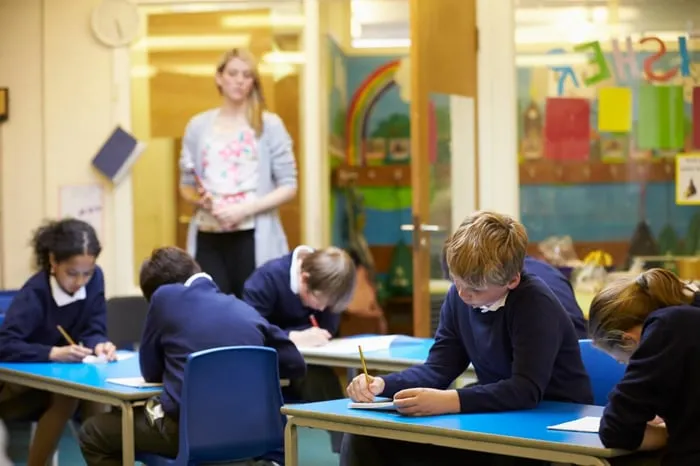

Schools across New South Wales are shifting their teaching practices to align with the New South Wales curriculum's move from a student-led approach to "explicit instruction."
This marks the most significant change in the New South Wales curriculum in five years, allowing teachers and students to work together to construct knowledge effectively and systematically.
What are the changes in expectations in the syllabus?
A syllabus outlines the course for students, detailing the requirements, assignments and deadlines, attendance, participation, and grading criteria. In short, it clarifies what is expected from students throughout the course.
This will be a new experience, as for the first time, primary school teachers will have a set of syllabuses to follow, ensuring students develop a strong foundational understanding of what is taught in the classroom. NSW Education Minister Pru Car described this change as one that will “reshape education” for decades to come.
Let’s take a look at some of the changes we can expect to see within the new set of syllabuses.
In science lessons, teachers will cover a variety of topics including the human body, the Earth and solar systems, climate, energy, food chains, and electricity.
In their Human Society and Its Environment lessons, students will explore real-life topics such as democracy and citizenship, as well as ancient civilisations. Human Society and Its Environment is set to replace History and Geography.
Health content sees students from kindergarten onwards receiving lessons on age-appropriate concepts of consent and the safe use of digital devices. This change aims to ensure that young learners understand the importance of personal boundaries and the responsible use of technology.
But what is ‘explicit instruction’?
Explicit instruction isn’t a new concept, it’s been used since the late 1960’s and is successfully used in countries including Hong Kong and Singapore. Although schools across Australia have been implementing explicit instruction, the NSW government is the first to mandate its usage in the curriculum.
Explicit instruction focuses on teacher-led lessons, providing students with the appropriate amount of guidance when learning new information. This approach involves breaking down information into small, manageable steps, enabling students to grasp key concepts. It allows teachers to model each step and clearly outline the pathway for success. Teachers will model, rehearse, and deliver new skills methodically, ensuring each step of the process is met and understood. They will check for understanding along the way using leading and thought-provoking questions.
Let’s compare explicit instruction to student-led instruction.
Using explicit instructions, the aim is for students to have a healthy balance between guidance and independence by maintaining a clear understanding of what is expected before and throughout the task, as well as the goals and knowledge used during the task.
The student-led method differs slightly from this approach, as it focuses on students constructing knowledge independently with less guidance from the teacher.
How Kinetic Tutors can help
At Kinetic Education, we believe in balancing guidance and independence through explicit instruction. Your english tutor will guide your child through their learning each week, starting by creating a learning plan tailored to their specific needs. You won’t need to guess what they need to study; your tutor will handle that for you!
Each time your child logs in to complete their learning plan, the tutorial will introduce the topic and their learning goals. It then breaks down the topic step by step, modelling how to work through each stage of the task using pictures, text, animations, and audio bites. The initial questions are simpler to ensure your child understands the concept. As they progress, the questions adapt to help them achieve the goals set at the beginning of the task. If they need extra help, there are clues and hints available, and they can jump back to the tutorial or call their tutor for assistance.
If your child needs additional help, they can speak with their tutor over the phone or on an online call. Our tutors follow the "I do, we do, you do" method using screen share technology. Tutors first explain the concept, providing students with the necessary knowledge and tools. Then, they work through an example together before enabling the student to demonstrate their understanding independently.
Using this approach we have seen tremendous results with our students. It enables us to break information down into small, manageable steps, enabling your child to grasp and retain key concepts in a way that isn’t confronting or scary! Learn more about our unique approach to successful learning at Kinetic Education today.